
Draft Cooperation Agreement between Alberta and Canada Fast Tracks Project Approvals at the Expense of Public Interest and Accountability
With the recent release of the draft Co-operation Agreement between Alberta and Canada on Environmental and Impact Assessment, CPAWS Northern and Southern Alberta are concerned about further degradation of environmental safeguards and public participation in the development of large infrastructure projects.
Announced on Friday, March 3, 2026, the draft agreement states that it will create a ‘one project, one review’ process for major projects. Although government communications frame the agreement as an efficiency measure, it raises serious concerns that there will be a lack of stringency in the regulatory review of large infrastructure projects that could pose significant threats to land, water, and wildlife in our province.
This agreement appears to be in direct contrast to the Government of Canada’s own 2030 Nature Strategy, which acknowledges that biodiversity across the country is imperiled. Not only is protecting ecosystems essential for climate resilience, clean water, and long‑term community well‑being, but it is also economically sound.
CPAWS Northern and Southern Alberta worry that streamlining assessment processes may come at the cost of the country’s natural spaces which are intrinsically valuable, as shown in a recent analysis stating that Canada’s Protected Areas Generated $10.9 Billion in GDP.
“The decisions we make about approving major projects are more consequential than ever. By giving more authority to Alberta’s regulators and speeding up approvals, the draft agreement will directly affect the ecosystems, watersheds, and species already under tremendous stress,” says Kecia Kerr, Executive Director of CPAWS Northern Alberta.
Overview of Concerns
Reducing Federal Involvement and wholly placing trust in the Alberta Energy Regulator (AER)
Projects that include adverse impacts on areas within federal jurisdiction – such as species at risk, fish and fish habitat, navigable waters, and the rights of Indigenous Peoples – will no longer require federal assessment or approval and instead will rely solely on the province to tell the federal government how these issues will be assessed through Alberta’s regulatory and environmental assessment processes.
However, Alberta’s regulatory review system does not always include legally binding conditions to address these federal concerns.
Furthermore, the Joint Review Panel process for review of major projects involving provincial or territorial and federal jurisdictions was already in place to avoid duplicative processes, enhance public participation, and respect Indigenous rights.
Trust in AER’s oversight, and objectivity, has also eroded in recent years based on numerous cases of regulatory capture, inadequate enforcement, and a lack of transparency regarding notifications of spills or leaks. Reducing federal involvement will further increase dependence on a regulator that consistently prioritizes industry interests over the public good.
The Agreement effectively gives Alberta, and by extension the AER, the final say on project approvals, even on matters that might have federal environmental implications.
Less Stringent Impact Assessments
Federal Impact Assessments often require broader cumulative‑effects analysis, climate considerations, and measures to protect wildlife designated under the federal Species at Risk Act, fish and fish habitat than provincial assessments. The federal government also has direct responsibility for the protection of Indigenous rights. If Alberta defines the scope of a project narrowly, or downplays certain risks, the entire process may overlook or obfuscate important environmental and community impacts.
CPAWS Southern Alberta’s work on federally listed threatened native trout and CPAWS Northern Alberta’s work on threatened caribou, make us deeply skeptical of the province’s commitment to prioritize and hold industry to account on the protection of federally listed species at risk.
The agreement also imposes a maximum two‑year timeline for impact assessments from submission of project description to decision. This will undoubtedly constrain the requirements for long-term baseline data collection and monitoring, cumulative effects modelling, Indigenous consultation, public input, and scientific review, all of which require time for meaningful analysis and incorporation into a project decision or approval conditions.
Barriers to Public Participation
In Alberta, public participation in project reviews is far more limited than under the federal system, because the AER uses a “directly and adversely affected” test to decide who may take part in hearings or file a Statement of Concern.
Under this standard, a person must demonstrate how a proposed project will personally and negatively affect their use of adjacent private land. In practice this means that only nearby landowners are granted standing to participate, ignoring broader downstream, downwind and civil society interests.
In one recent case, the CEO of the AER went over the heads of the panel commissioners and personally cancelled a public hearing on a major coal project, thereby denying the public participation rights of CPAWS Northern Alberta and effectively sidestepping established regulatory procedures.
By contrast, the federal process explicitly provides open opportunities for meaningful public participation in each phase of an impact assessment, allowing any interested member of the public to engage, submit comments, and see how their input influences decisions.
While faster provincial reviews might help industry, they can also mean fewer opportunities for environmental experts, Indigenous communities, and the public to raise issues or challenge weak assessments.
Rights of Indigenous Peoples
The federal government is responsible for ensuring that project impacts protect Treaty rights.
However, the Agreement explicitly states that while “Canada maintains its commitment to the United Nations Declaration on the Rights of Indigenous Peoples (UNDRIP),” Alberta “views UNDRIP as non-binding.”
This raises significant questions on whether the AER will require meaningful consultation and reflect input and involvement of Indigenous peoples in project decisions and ultimately, whether decisions will respect Indigenous rights.
“This Agreement means that federal review will be reduced or eliminated for projects related to major oil sands or coal projects, where cumulative effects, public interest and impacts to areas of federal jurisdiction are substantial,” concludes Katie Morrison, Executive Director of CPAWS Southern Alberta.
“Projects of considerable public concern, such as the Grassy Mountain Coal Project, would be subject to far less rigorous, accountable, and transparent processes. This is of tremendous concern to all those who value our public lands and waters, their integrity, and our access to them.”
An impact assessment process must encourage public participation, restore independent oversight, embed climate and cumulative‑effects science, respect Indigenous rights, increase transparency, and ensure strong, enforceable standards.
Submit your Feedback
There are two ways you can voice your concerns with the draft Cooperation Agreement:
- Send an email to Prime Minister Carney (mark.carney@parl.gc.ca) and the Minister of Environment and Climate Change Canada Julie Dabrusin (julie.dabrusin@parl.gc.ca)
- Consider cc’ing the Minister of Minister of Energy and Natural Resources of Canada Tim Hodgson (tim.hodgson@parl.gc.ca) and the Minister of Internal Trade Dominic LeBlanc (dominic.leblanc@parl.gc.ca)
- Consider cc’ing the Minister of Minister of Energy and Natural Resources of Canada Tim Hodgson (tim.hodgson@parl.gc.ca) and the Minister of Internal Trade Dominic LeBlanc (dominic.leblanc@parl.gc.ca)
- Submit a comment through the official feedback form on the draft Cooperation Agreement.
- Please note: You must first create an account here.
Suggested Comment
As an Albertan, I am deeply disappointed about the recent draft Co-operation Agreement between Alberta and Canada on Environmental and Impact Assessment.
Large resource and infrastructure projects pose considerable risks to lands and waters that impact key areas of jurisdiction and responsibility of the Government of Canada.
I have significant concerns about the federal government downloading its responsibilities to a provincial regulatory system that is not designed to meaningfully enforce federal legislation or address federal interests and is not trusted by the public. If Alberta defines the scope of a project narrowly, or downplays certain risks, the entire process may overlook, ignore, or downplay important environmental and community impacts.
Accountable, transparent, and meaningful engagement of the public is necessary throughout the entire regulatory process. This draft agreement threatens to weaken, and in some cases potentially eliminate, the opportunity for Albertans to have a say in the projects that impact our quality of life and our livelihoods. This is unacceptable.
Importantly the Agreement also states that Alberta “views UNDRIP as non-binding.” This raises significant questions on whether the AER will require meaningful consultation and reflect input and involvement of Indigenous peoples in project decisions
We must have an impact assessment process that encourages participation, restores independent oversight, embeds climate and cumulative‑effects science, respects Indigenous Peoples and their Rights, increases transparency, and ensures strong, enforceable, and evidence-based standards.
Your Name
More News

Alberta Claims to Meet 30×30 Targets with Dubious Claim
Currently, only about 15% of Alberta’s land is formally classified as protected. Yet, the province appears to be side-stepping its…
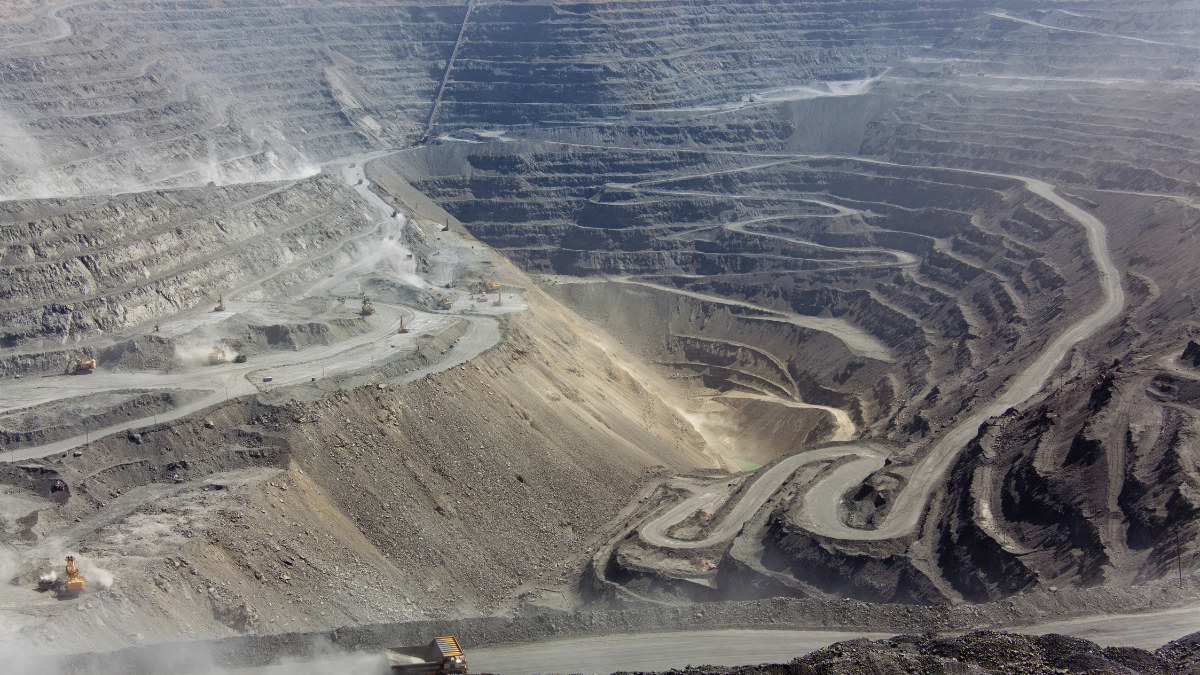
Northback Applies for Water License for Blairmore Creek Watershed
Application contradicts company claim that the Grassy Mountain Project will have “No water drawn from creeks or rivers.”…
Draft Cooperation Agreement between Alberta and Canada Fast Tracks Project Approvals at the Expense of Public Interest and Accountability
‘One project, one review’ process for major projects will further degrade environmental safeguards and public participation.…