2026 Alberta Budget: Our Thoughts
(Calgary/Edmonton, Alberta) – March 6, 2026
Our Thoughts on Alberta’s 2026 Budget
CPAWS Northern and Southern Alberta are disappointed to see that the 2026 Provincial Budget does little to strengthen the systems that safeguard biodiversity, guide responsible land use, or ensure long-term ecosystem health in our province.
The provincial budget is not just a fiscal strategy, but an indicator of government priorities over the next year. The signs are not good for Alberta’s lands and waters.
Here is a summary of our thoughts on the budget related to key land and water priorities:
Overall Trends
1. Resource expansion prioritized over environmental protection
The government’s 2026–29 strategy highlights clear targets for resource development, including increasing Alberta’s global share of oil supply and committing to near-guaranteed approval timelines, yet blatantly lacks comparable measurable targets for biodiversity recovery, intact habitat protection, or cumulative effects reduction.
2. Underfunding and weakened regulatory capacity
While the budget uses language about “sustainability” and “environmental outcomes,” it simultaneously reduces funding for key conservation programs and focuses on increasing regulatory efficiency and decreasing barriers for industry in ways that could weaken oversight.
3. Planning and protection commitments remain mostly aspirational
Government plans reference regional planning, park expansion, and species at risk management, but these are not backed by dedicated objectives, funding, or timelines, meaning they are unlikely to be implemented.
Key Concerns
- Land use planning without funding: The government reiterates its promise to complete regional and sub regional plans, yet allocates no dedicated resources for consultation, implementation, or enforcement.
- Cuts to caribou recovery: Funding for caribou recovery dropped to $27 million, half of previous levels, despite widespread habitat disturbance and incomplete land-use plans to support recovery.
- Coal development: The budget includes an objective to modernize coal legislation, explicitly supporting new coal development and putting sensitive Eastern Slopes landscapes and communities at risk.
- No commitment to protecting parks: Nowhere in the Outcomes, Objectives, or Initiatives for either Forestry and Parks or Environment and Protected Areas is there any mention of conserving or protecting Alberta’s parks or protected areas—a glaring declaration of priorities.
- No funding for protected areas expansion: While the recently released Plan for Parks calls for expanding Alberta’s protected areas network, the budget does not provide funding to deliver on this commitment and fails to support Indigenous Protected and Conserved Areas.
- Tourism growth ahead of environmental safeguards: The government continues to invest in expanding the visitor economy, which supports movement towards a diversified economy. However, the approach fast tracks commercial development, including All Season Resorts, ahead of thoughtful regional planning to support sustainable use, threatening the very places this industry relies on.
- Weak oversight and accelerated approvals: Increased regulatory “efficiency” and focus on reducing barriers for industry risks further eroding environmental oversight at a time when Alberta’s ecosystems are under mounting pressure.
Summary
Overall, the 2026 budget emphasizes resource expansion and streamlined processes, while ignoring the economic benefits of nature and offering limited explicit new commitments to biodiversity protection, species recovery, and long‑term land stewardship of nature in our province. Albertans continue to express strong support for conserving public lands, strengthening protections for wildlife, and guaranteeing that growth occurs within ecological limits. Recently released research also confirms that investing in protection of nature makes excellent economic sense —with every dollar invested bringing three in returns and numbers for jobs equaling resource extraction industries in many parts of the country.
In the face of rising environmental pressures, scaling back conservation funding or delaying comprehensive planning brings considerable long-term fiscal and ecological risk. Ensuring that Alberta’s growth remains sustainable will require renewed and measurable investment in ecosystem protection, species recovery, and responsible land management.
Future budgets should specifically include:
- Dedicated funding for regional land-use plan, consultation, implementation and enforcement;
- Measurable targets for intact habitat protection;
- Consistent, multi-year funding for species at risk recovery, including for habitat protection for caribou, native trout and other species at risk;
- Dedicated funding for expansion of parks and protected areas.
- Dedicated support for Indigenous Protected and Conserved Areas;
- Public reporting on cumulative effects and ecological carrying capacity.
Details on Priority Areas and Concerns
Regional Planning
The budget reiterates the intention to complete outstanding regional and sub-regional land use plans, but it does not clearly allocate sufficient dedicated funding to carry out this work.
Effective land-use planning requires strong consultation, implementation capacity, capacity for ecological analyses, and enforcement. Without meaningful resources behind it, land use planning remains aspirational rather than actionable, leaving sensitive ecosystems exposed to incremental and inconsistent development decisions.
Contrary to this intention, the budget reduced funding for caribou recovery to $27 million for 2026–27, roughly half of previous allocations. This contraction comes at a time when habitat disturbance across caribou ranges remains widespread, and commitments to complete 9 out of 11 remaining caribou land use plans remain, indicating that the quality of land use planning will similarly be reduced. Restoration projects, while important, are not a substitute for protecting intact habitat. Without stronger preventative measures, including science-based land-use plans, recovery timelines will continue to slip. The budget does not include recovery of threatened caribou populations as an Outcome, making it clear that they have no intention of saving the species.
Budget ReferencesMinistry of Environment and Protected Areas Ministry Business Plan:
Objectives:
1.2 Deliver science-based environmental condition monitoring, evaluation, and reporting on Alberta’s air, water, and biodiversity, including development of provincial scale indicators, to support environmental stewardship, conservation, and Albertans’ safety.
1.3 Protect, conserve and sustainably manage the province’s fish and wildlife through policy solutions, pilot programs, and partnerships to achieve environmental, social, and economic benefits for Albertans.
Initiatives
$27 million is allocated for caribou recovery planning and actions in 2026-2027, to maintain and improve caribou habitat while supporting economic, recreational, and traditional land uses.
Coal
Despite more than six years of pushback from Albertans on any further development of coal exploration or mines in the Eastern Slopes of the Rockies, the Ministry of Energy budget includes an objective that explicitly includes coal development. Objective 2.3 states that the government intends to “Modernize Alberta’s coal legislation and regulatory framework to guide responsible development, protect the environment and collect an appropriate share of royalties for the benefit of all people in Alberta.”
This is a reference to the Coal Industry Modernization Initiative, which is being developed exclusively with coal companies, without public or Indigenous consultation, and leaves sensitive areas without protection from ongoing coal development.
Last year, the Government of Alberta paid out over $237.8 million to coal companies, without confirmation that the land their leases were on will be protected, or remain free of new coal mines. Retaining almost no value for Albertans from this boondoggle policy flip flop.
Budget References
Ministry of Energy and Minerals Ministry Business Plan
Objectives
2.3 Modernize Alberta’s coal legislation and regulatory framework to guide responsible development, protect the environment and collect and appropriate share of royalties for the benefit of all people in Alberta
Parks & Protected Areas
Glaringly absent in any of the Outcomes, Objectives or Initiatives for the Ministry of Forestry and Parks or the Ministry of Environment and Protected — the two ministries responsible for our protected areas network — is any reference to conservation or protection of parks or protected areas. These ministries’ budgets instead focus solely on increasing development for access and infrastructure. This omission reflects, not only the lack of commitment to parks and protected areas, but an underlying ideological approach to treating protected areas the same as unprotected public land and ignoring the critical importance of protected areas in landscape conservation for the purpose of biodiversity conservation. Albertans repeatedly indicate that they value parks and protected areas for nature protection, and recent analysis once again strongly shows that nature conservation benefits the economy, and quality of life.
The sole Objective that references parks includes the implementation of the recently released Plan for Parks, which does commit to the expansion of Alberta’s Protected Areas Network; however, the budget does not include any funds or supporting initiatives to fulfill this part of the Plan. Given the clear economic case for new parks and strong support from Albertans, the first budget after the release of the new Plan For Parks would have been an excellent place to clearly commit to expanding protection of nature and implementing the Plan.
The Ministry of Forestry and Parks budget allocates $102.9 million to maintain Alberta Parks operations in 2026–27 and additional funding for recreation infrastructure. We now see that the concern we voiced in February when the Plan for Parks was released was well founded. Although maintaining safe and accessible public spaces is important, continuing to expand development solely within existing protected areas increases the pressure on these finite areas and risks degrading the natural assets upon which sustainable recreation and tourism depend. This budget is a lost opportunity to invest in expanding the protected areas network and providing new opportunities for protection and sustainable recreation.
However, it is encouraging to see a marginal increase in budget towards Crown land enforcement and awareness to better manage recreation across the province.
The budget additionally references collaboration with Indigenous Peoples, but it does not provide financial support for Indigenous Protected and Conserved Areas. Indigenous-led stewardship plays a vital role in conserving biodiversity and advancing reconciliation and could represent the most cost-effective and culturally grounded strategy for Alberta to achieve meaningful conservation objectives. Failing to allocate resources to support these projects represents a missed opportunity for necessary, community-driven conservation outcomes that support reconciliation.
Budget ReferencesMinistry of Forestry and Parks Business Plan
Key Objective
3.1 Implement a Crown land recreation and conservation strategy and a new Plan for Parks.
Initiatives Supporting Key Objectives
-In 2026-27, $87.1 million is allocated to invest in Crown land recreation capital initiatives, including refurbishing infrastructure and facilities and building trails.
-In 2026-27, $102.9 million is allocated to maintain operations of the Alberta Parks system.
Sustainable Recreation & Tourism
The government continues to invest in expanding the visitor economy with the goal of growing the province’s visitor economy to $25 billion in annual visitor expenditures by 2035. Budget 2026 allocates $75.2 million to Travel Alberta to support tourism growth and diversification.
The budget objectives also include the implementation of the All‑Season Resorts Act by the Ministry of Tourism & Sport, which aims to advance resort development, particularly in the Rockies. This objective prioritizes the expansion of year-round recreation opportunities across Kananaskis, Crowsnest Pass, David Thompson, and Grande Cache regions, expediting past regional land use plans and environmental review processes.
Tourism is an important driver and diversifier of Alberta’s economy, but growth of industry must occur within the context of our province’s real ecological limits; and, crucially, it should be occurring as part of broader, integrated land-use planning processes designed to prioritize the integrity of our public lands and waters. Advancing major commercial development before completing land use planning threatens the very places this industry relies on. The dangerous precedent set in the designation of the first three All Season Resort Areas in December 2025, which removed protected area designations to facilitate commercial development, does not inspire confidence in this process moving forward.
This focus on development of large, private resorts is also contrary to Objective 3.3 of the Forestry and Parks business plan to “ensure Albertans have access to sufficient high-quality and low-cost outdoor recreation opportunities.”
Budget ReferencesMinistry of Tourism and Sport Business Plan
Key Objective
1.1 Continue implementation of Alberta’s long-term Higher Ground Tourism Sector Strategy with a goal of growing the province’s visitor economy to $25 billion in annual visitor expenditures by 2035.
1.2 Implement the All-Season Resorts Act by expanding opportunities for sustainable tourism in the Alberta’s Rockies with a special focus on the Kananaskis, Crowsnest Pass, David Thompson, and Grande Cache regions.
Initiatives Supporting Key Objectives
-In 2026-27, $75.2 million is allocated to Travel Alberta to foster tourism growth and diversification and attract visitors from around the world.
Species at Risk
Budget 2026 commits to “species at risk management through modernized legislation and policy and negotiation of protocols and agreements to safeguard Alberta’s jurisdiction.” This is concerning as the emphasis on protecting provincial jurisdiction continues a pattern of rhetoric opposing federal involvement in land management. However, biodiversity is a shared responsibility across all levels of government. Regardless of whether the policy is provincial or federal, Alberta’s actions should work to halt and reverse biodiversity loss and protect all wildlife from decline.
Alberta has existing policies purported to support species at risk recovery, such as the 2011 Woodland Caribou Policy. The policy has not been implemented, and instead the loss of caribou habitat has accelerated and furthered theirpopulations continue to decline. Similarly, land use policies and legislation that accelerate and prioritize resource extraction are the very policies driving species declines. Rather than create new aspirational provincial frameworks or rely on policies that were not designed to recover species, the province should direct resources to fully implementing species at risk legislation and updating provincial resource and land-use legislation and policy to explicitly support species at risk recovery.
The absence of explicit funding for implementing other recovery strategies for at-risk species, including native trout populations, suggests that this objective completely misses the mark.
Budget ReferencesMinistry of Environment and Protected Areas Business Plan
Key Objective
1.8 Enhance Alberta’s species at risk management through modernized legislation and policy negotiation of protocols and agreements to safeguard Alberta’s jurisdiction.
Water
Budget 2026 also identifies funding to enhance water availability and strengthen water management systems through programs such as the Water Storage Assessment Program and drought and flood protection initiatives. Improving water resilience is a positive step given the drought conditions across Alberta in recent years. However, this strategy ignores the immense value of headwaters protection and natural infrastructure as the first, and most cost effective, approach to maintaining and increasing water security and long-term availability.
Funding for ‘the accelerated strategy of oilsands mine water’ is inappropriate given the extreme concerns raised by Indigenous, environment, and health groups. The Steering Committee recommendations propose releasing treated oil sands tailings into the Peace Athabasca watershed without meeting required criteria put forward by downstream nations. Tailings release into the river would put communities and ecosystems at serious risk and fail to provide a real solution to the province’s growing tailings issue. If adopted, hazardous waste could make its way into waterways that people and ecosystems rely on.
Proposed efficiency‑driven regulatory changes need to not only focus on water allocation and use but also ensure aquatic ecosystems and downstream communities are protected.
Budget ReferencesMinistry of Environment and Protected Areas Business Plan
Key Objective
2.4 Enhance Alberta’s water management strategy to increase water availability and ensure responsible long-term management of water resources while respecting traditional uses, maintaining ecosystem health and meeting transboundary agreement commitments.
2.5 Finalize the accelerated strategy for oil sands mine water management and tailings pond reclamation through implementation of the Steering Committee recommendations.
Initiatives Supporting Key Objectives
-$30.3 million is allocated in 2026-27 to enhance water availability including improved measurement policy and data management, storage solutions through the Water Storage Assessment Program and the Drought and Flood Protection funds to support community resilience.
-$0.33 million in 2026-27 to support the accelerated strategy for oilsands mine water to address mine water issues and protect the environment and downstream communities.
Regulation
The budget and ministry business plans rely on encouraging words like “environmental outcomes,” “sustainability,” and “stewardship,” while also reducing oversight of industrial developments.
While increasing regulatory efficiency is an important government objective, it cannot come at the expense of already fragile environmental oversight. Recent concerns raised by CPAWS Northern and Southern Alberta illustrate the risks of weakening checks and balances in both industry and commercial development regulation. In the case of the Alberta Energy Regulator (AER), CPAWS Northern Alberta has warned that the AER CEO’s unprecedented decision to cancel a public hearing on a major coal project effectively sidestepped established regulatory procedures and erodes public trust in oversight meant to protect Alberta’s lands and waters.
Similarly, for forestry in Southern Alberta, outdated legislation, limited public consultation, and inadequate enforcement have enabled significant degradation of critical trout habitat putting vulnerable ecosystems at further risk despite existing federal and provincial protections.
The transfer of decision-making power on the All Season Resort Areas from the Ministry of Environment to the Ministry of Tourism and Sport in 2024 raises questions on the neutrality of the regulatory process.
Such approaches may fast track approvals without strengthening transparency, accountability, and science‑based decision-making, which risks further weakening an oversight system already struggling to protect the public interest.
Budget ReferencesMinistry of Environment and Protected Areas Business Plan
Objectives
2.1 Modernize Alberta’s regulatory system through expediated decisions on approvals for priority projects, digital online system enhancements and implementation of designated industrial zones, to facilitate regulatory efficiency, effectiveness and certainty, reduce red tape and support economic growth and investment in Alberta.
2.6 Lead and support efforts to defend Alberta’s jurisdiction and protect the integrity of Alberta’s environmental regulatory system while enabling responsible resource development. (ie push back on any federal impact assessments)
Ministry of Forestry and Parks Business Plan
Objective 2.1 Minimize regulatory and process barriers to improve service delivery, reduce red tape, and support economic opportunities on Crown land and forests.
Ministry of Energy Business Plan
Objective 2.2 Collaborate with other ministries to streamline government processes and enhance regulatory efficiency and effectiveness through measures such as establishing an expedited provincial approval process for priority projects and promoting sustainable resource development through initiatives such as the Mature Asset Strategy.
More News
What are protected areas in Alberta for if they aren’t, actually, protected?
Is an area really protected in Alberta if its boundaries can be changed at the whim of a Minister?…
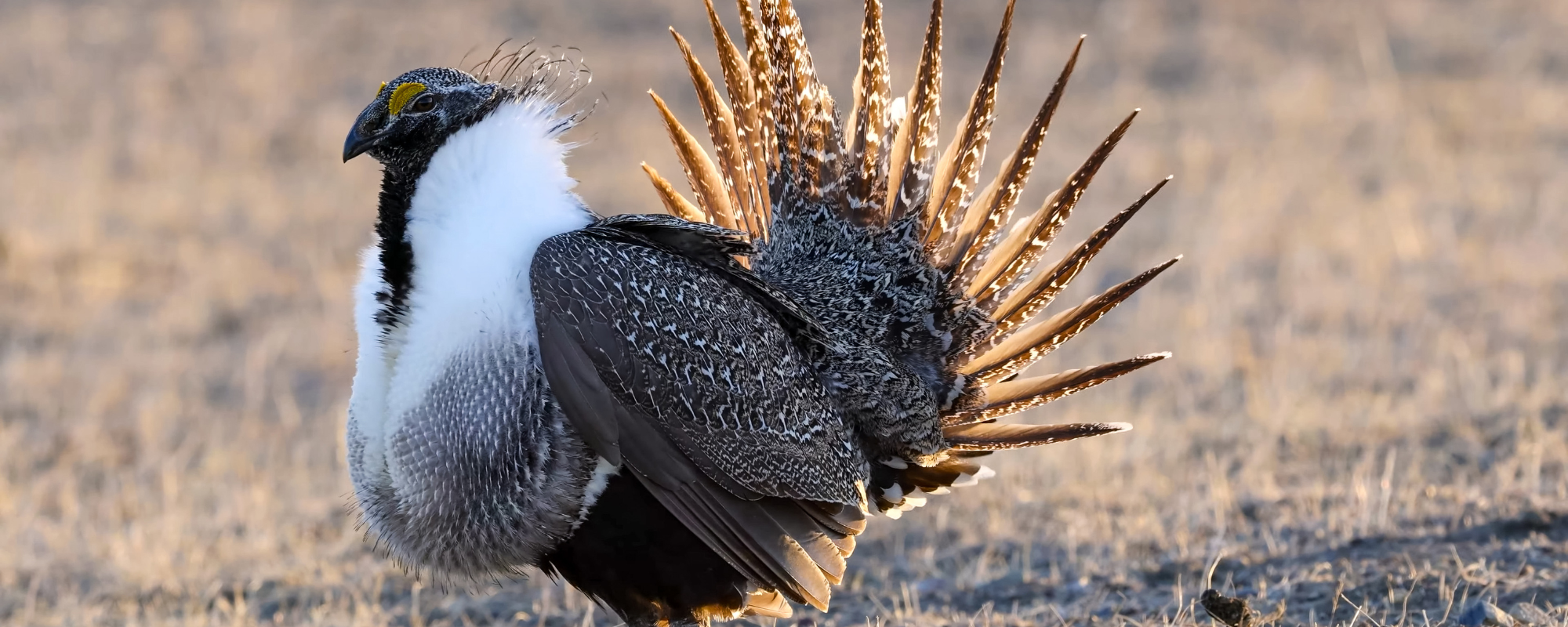
Government of Alberta quietly lifts restrictions protecting endangered Greater Sage-Grouse
Provincial habitat protections for the endangered Greater Sage-Grouse have been removed…
Implementation Pathways for Sustainable Tourism in Alberta
Tourism proposals should consider cumulative effects, wildlife movement, species at risk, human-wildlife coexistence, and impacts throughout the entire project lifecycle.…