Logging Permits Approved in Key Trout Spawning Area of Oldman River
Mohkinstsis | Calgary
Treaty 7, Alberta
January 16, 2026
CPAWS Southern Alberta is urgently calling on the Department of Fisheries and Oceans Canada (DFO) to revoke or amend a federal permit, issued in late 2025, that allows logging operations to destroy listed Critical Habitat in the Upper Oldman region.
The permit allows for the construction of 62 temporary crossings that would destroy Critical Habitat for threatened bull trout and westslope cutthroat trout, which is explicitly prohibited under the Species At Risk Act.
While similar to the unlawful construction of the Highwood Bridge in what at the time was suspected Critical Habitat, this permit is perhaps even more troubling, as the data already exists to show how important this area is to at-risk native trout in Alberta.
Critical Habitat at Risk

While the permit as a whole is problematic, one crossing stands out as particularly worrisome. Located just one kilometre downstream from the Upper Oldman River Falls, the permit grants authorization to destroy Critical Habitat to facilitate logging in the Upper Oldman and the Hidden Creek subwatershed. This is likely one of the most important known bull trout spawning locations in the Southern Eastern Slopes.
Data collected over the past two decades by government, the Blackfoot Confederacy Tribal Council Native Trout Recovery Project, and conservation groups — including CPAWS Southern Alberta’s recent surveys — has consistently shown this location to be extremely important spawning habitat with one of the highest known concentrations of redds (spawning nests) in the region.
Moving forward with the activities described in the permit would pose an unacceptable risk to the population.
“This stretch of the Oldman River is crucially important for bull trout spawning, as well as for westslope cutthroat trout. This habitat is nothing short of vital for the survival of the Oldman River population,” says Joshua Killeen, Conservation Science & Program Manager at CPAWS Southern Alberta.
History of Failures in Erosion Control
The permit issued by DFO erroneously relies on the assumption that erosion and sedimentation will be avoided in road and bridge construction. The science is clear that excess fine sediment is harmful to trout, particularly when exposure is long lasting, and particularly for eggs and juveniles that are unable to move away from areas with high sediment loads.
Erosion and sediment control failures at forestry crossings in this region are well documented.
While many in our audience will be most familiar with the highly-publicized failures in 2024 at the Highwood bridge in Kananaskis, field assessments conducted by CPAWS Southern Alberta in 2025 documented erosion and/or sedimentation occurring at an astonishing 71% of crossings visited — see also cases in 2022 and in 2023 that led to fines under provincial regulation.
DFO’s own monitoring in 2021 found that 50% of the crossings visited had erosion and sediment control issues.

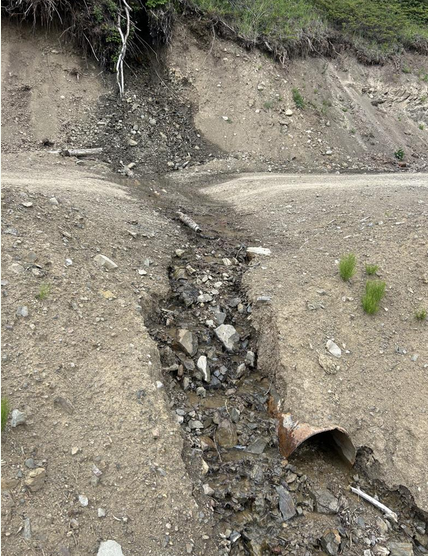

These failures to appropriately protect Critical Habitat for listed Species and Risk, and mitigate the detrimental impacts of forestry operations, continue to occur across the region. At a location as important as this one on the Oldman River, the risk of allowing the construction of crossings is unacceptably high and, quite simply, unjustifiable.
Call to Action
Given the known importance of the Upper Oldman, the repeated failures of erosion and sediment control measures in the region, and new data reaffirming the importance of this location, CPAWS Southern Alberta is urging the Minister of Fisheries and Oceans Canada to exercise authority under Section 73(8) of the Species at Risk Act and/or Section 35(2) of the Fisheries Act to revoke or amend the permit to ensure the survival and recovery of bull trout and westslope cutthroat trout populations.
More News
Draft Cooperation Agreement between Alberta and Canada Fast Tracks Project Approvals at the Expense of Public Interest and Accountability
‘One project, one review’ process for major projects will further degrade environmental safeguards and public participation.…
Bow Valley Wildland Provincial Park under threat from All-Season Resorts Act
Silvertip Gondola up Mount Lady Macdonald now being considered for designation under the All Season Resorts Act, removing provincial park land from…
2026 Alberta Budget: Our Thoughts
The Government of Alberta has released its 2026 Budget. Here’s our take.…