Risks of Offsetting for Species-at-Risk Highlighted by Independent Auditor’s Report
by Joshua Killeen
Conservation Science & Programs Manager, CPAWS Southern Alberta
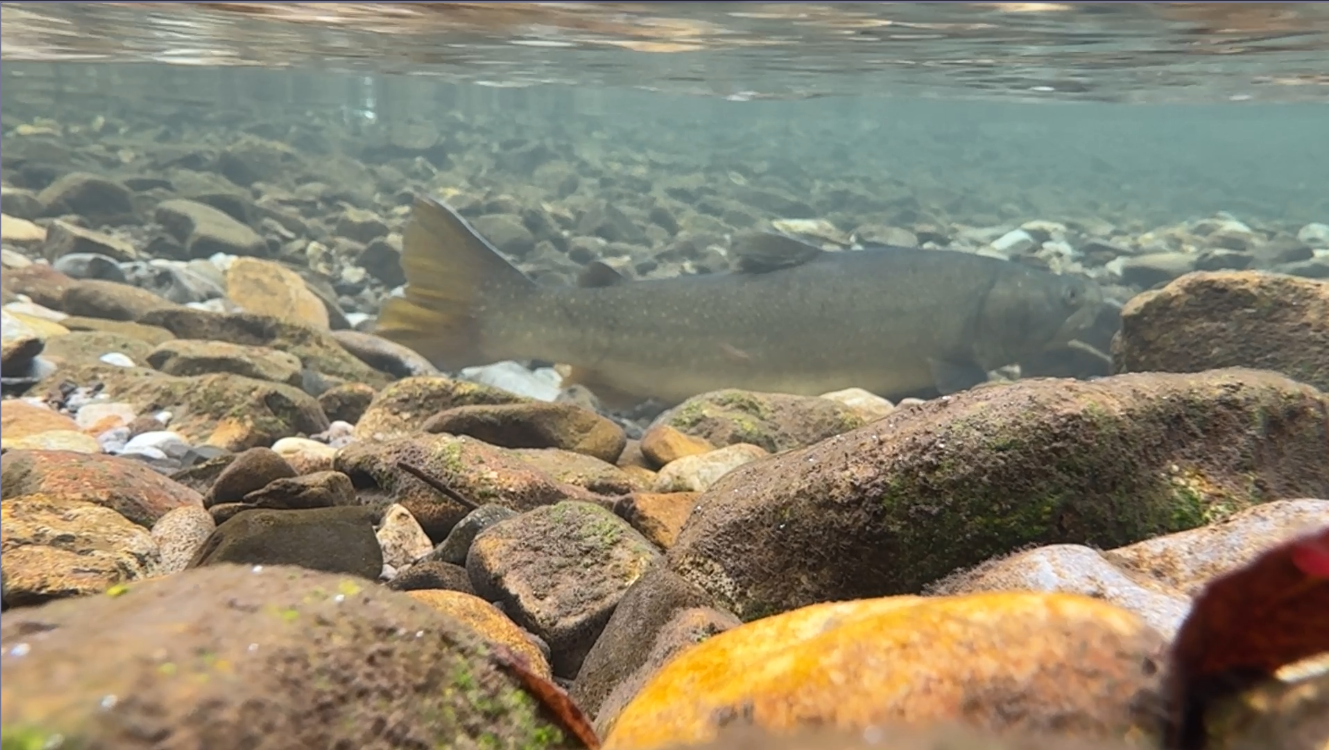
In 2025, we saw Fisheries and Oceans Canada (DFO) issue permits allowing widespread Critical Habitat destruction for threatened native trout species for the purpose of logging operations (example). We recently provided a news release about an especially concerning example in the Upper Oldman headwaters. See also our discussion on why these permits should not be issued in the first place.
An Overreliance on Offsetting
In the latter part of 2025, four permits were issued in southern Alberta authorizing the destruction of Critical Habitat for both Bull Trout and Westslope Cutthroat Trout. Collectively, these permits allow for Critical Habitat destruction at 106 new forestry road crossings.
All these permits are deemed as justified by DFO, at least partly, based on the idea that offsetting will make up for the damage done.
Permits say things like, “Offsetting measures will be carried out to counterbalance the authorized activities.” This is despite the fact that offsetting is intended to be a last resort. DFO’s own permitting policy is clear on this, stating, “Consider opportunities to counterbalance harmful impacts to fish and fish habitat through the implementation of offsetting measures only after all options to avoid and mitigate have been exhausted.” After all, the ultimate objective is not just to maintain the current status of threatened trout, but to actively work toward their full recovery.
Avoidance Measures Not Meaningfully Considered
These permits do not meaningfully consider avoidance. Instead, they state that “The alternative to ‘do nothing’ at this site is not a reasonable option, as the crossings are required for the harvesting operations.” This is also counter to the species’ Recovery Strategies which explicitly identify habitat loss and degradation associated with logging operations and crossings as high threat to recovery of the species.
High‑Risk Tradeoffs for Threatened Trout
The planned offsetting takes the form of “restoration of riparian habitats at unauthorized watercourse crossings,” “implementation of access controls to prevent off highway vehicle use at unauthorized watercourse crossings,” and “installation of signage at unauthorized crossing locations.”
Trading intact, high-quality habitat — home to some of the last remaining populations of native trout — for the uncertain promise of improving already degraded habitat, is an extremely high-risk approach for a species at risk.
In fact, it is well understood that offsetting projects are often ineffective. For example, a review of 577 freshwater ecosystem offsets found crucial problems persisted after offsets were completed, and even with high levels of compliance, offsetting programs did not guarantee a high degree of ecological function.
National Audit Flags Shortcomings of Offsetting
This brings us to the report on Critical Habitat for Species at Risk from the Office of the Auditor General of Canada, which was published in 2025. It included several important findings, including significant failures when it comes to identifying Critical Habitat for at-risk species. It also explored the use of offsetting and highlighted some major concerns.
The audit reviewed 4 offsetting plans for species at risk and found that none of the four were progressing as planned: “One offset was completely overhauled despite being approved by the department because it was not feasible” and “Two other offsetting plans were not approved and submitted to the department within the stipulated timeline, and another offsetting plan consistently failed to meet some of its targets 3 years in a row.”
Furthermore, DFO “had not completed any analyses of the overall effectiveness of using offsets,” meaning “the department does not know how successful the overall use of authorizations with offset measures has been over time to manage impacts to critical habitat or which types of offsets work best for specific cases.”
Despite this, the permits for logging that we have seen issued this year rely on offsets as a justification for the authorized destruction of Critical Habitat, claiming it will not affect the survival and recovery of the species.
Justifying Critical Habitat Destruction with Offsetting Threatens Native Trout
The evidence is clear that this is an extremely high-risk approach for species whose remaining habitat is already only a fraction of what it was. By relying on offsets, the survival and recovery of our native trout species is put in jeopardy.
More News
Draft Cooperation Agreement between Alberta and Canada Fast Tracks Project Approvals at the Expense of Public Interest and Accountability
‘One project, one review’ process for major projects will further degrade environmental safeguards and public participation.…
Bow Valley Wildland Provincial Park under threat from All-Season Resorts Act
Silvertip Gondola up Mount Lady Macdonald now being considered for designation under the All Season Resorts Act, removing provincial park land from…
2026 Alberta Budget: Our Thoughts
The Government of Alberta has released its 2026 Budget. Here’s our take.…